Northeast India in Ptolemy’s “Geographies”
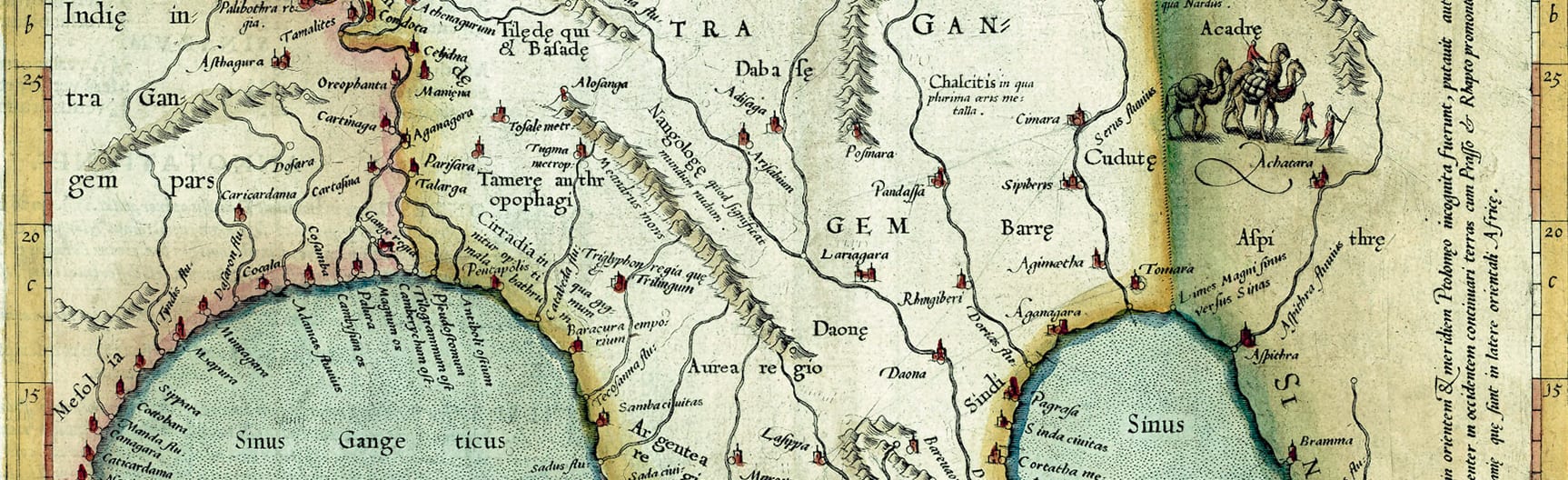
“Βut still beyond this, immediately under the north, at a certain point, where the exterior sea terminates, lies a city called Τhina, not on the coast, but inland, from which both the raw material, and manufactured silk, are brought by land through Βactria to Βarugáza, or else down the Ganges [to Βengal,] and thence by sea to Limúrikè on the coast of Μalabar.”
So begins possibly the first mention of Northeast India in the historical record, in Arrian’s “Periplus of the Erythrean Sea”, which is dated to around 100 BCE (and subsequently copied into Ptolemy’s ‘Geographies’). The passage (from an 1809 translation by Vincent) continues with what is likely the first mention of an Austroasiatic group (the “Sesatae”):
“Τo Τhina itself the means of approach are very difficult; and from Τhina some few [merchants] come, but very rarely: for it lies [far remote] under the constellation of the lesser bear… Οn the confines of Τhina an annual fair or mart is established; for the Sesatae, who are a wild uncivilized tribe, assemble there with their wives and children. Τhey are described as a race of men squat and thick set, with their face broad, and their nose greatly depressed… Τhe articles they bring for trade are of great bulk, and enveloped in mats or sacks, which in their outward appearance resemble the early leaves of the vine [malabathrum or betel-nut].”
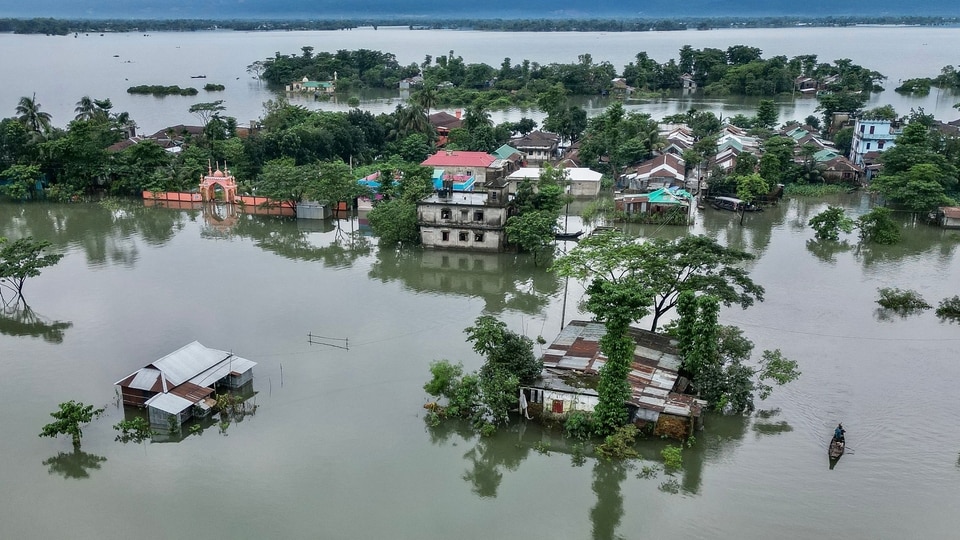
From the description here and elsewhere, this area seems to border (to the north of) what is now Kolkata, where the Ganges river delta meets the Indian ocean. During the monsoon season it was quite common for flooding to occur all the way north to the edge of the Meghalaya plateau, allowing for boat passage to the Sylhet/Jaintiapur region, later erstwhile summer capital of the historical Jaintia (Khasian) kingdom.
Piecing together the Austroasiatic element
Although there isn’t much to go on from the historical record, I piece together what little there is in a new paper published as part of a special issue of the Journal of Burma Studies. By drawing on archaeology, linguistic evidence, and cultural practices, I make the case that the Austroasiatic peoples are those that early travelers traded with, for areca (betel) and silk. Iron bloomery sites on the plateau support a potentially pre-50 BCE date of habitation, with other archaeological evidence indicating that the Khasian group migrated there from further east.
There is still a lot of prehistoric and archaeological research that needs to be done in Northeast India. I highlight some of the inherent difficulties (climate conditions, local support), but there are also a lot of opportunities. The Meghalaya plateau in particular has some key settlement sites that have yet to be surveyed.
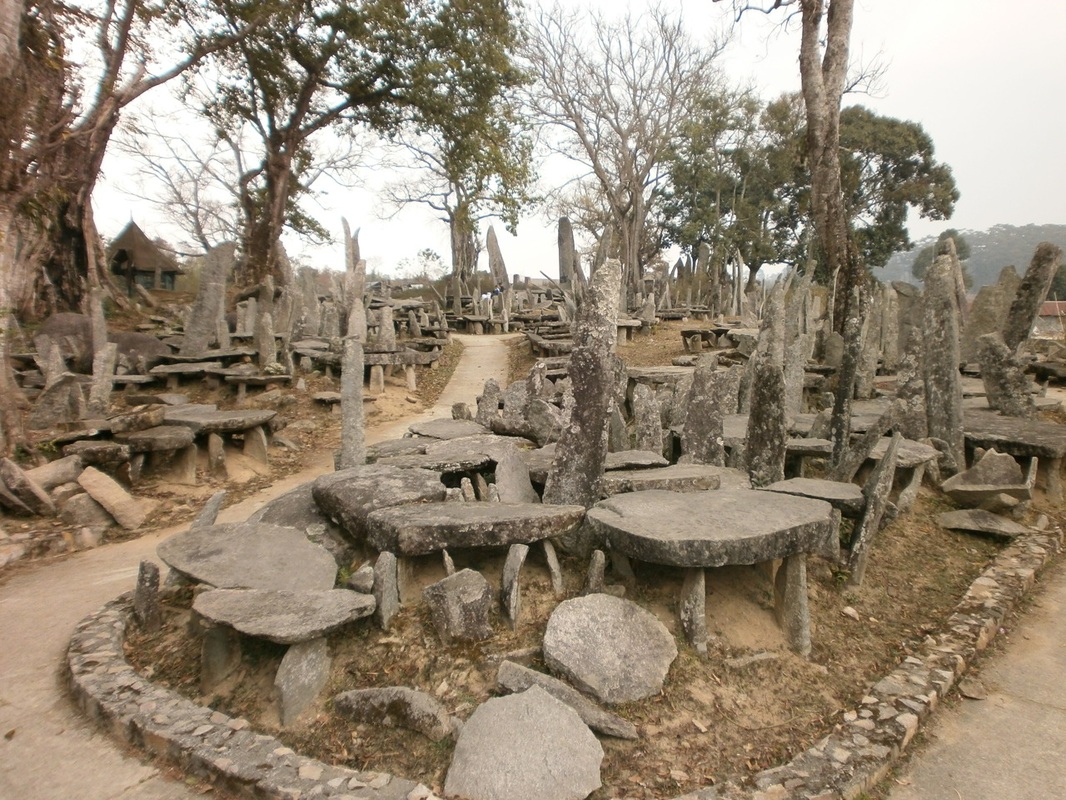
The linguistic evidence I present is primarily from lexical borrowings. Words borrowed into Khasian varieties from early Indo-Aryan and Tibeto-Burman languages, Persian, and more recently English/Hindi/Bangla can indicate a historical time frame of contact. Degree of integration of these words into grammar can also be an indication of how long/sustained/engaged the contact was. Along with the archaeological evidence, linguistic patterns help to establish that the Khasian group has lived in their current location for a long time. As members of the Austroasiatic phylum, however, their ancestral homeland is further east.
This connection with Southeast Asia is seen quite clearly in cultural patterns. One particular observation I make regards the concept of “mandala”, which describes a certain conceptualization of social structure. This cultural pattern is most clearly identified by Wolters (1999), who described the idea of a single polity (town, city) based around an individual with some sort of spiritual power. The power of the individual might allow the polity to grow into something resembling a kingdom in the hierarchical sense, but the underlying expectations and assumptions for maintenance were quite different.
Much work to be done
Overall, there is clear evidence that people were quite active in and across the region of Northeast India since ancient times. Hopefully as research continues we will be able to learn more about the different ways in which people interacted across linguistic and cultural domains in this region.