Recipe for “Languages of Africa”
As part of the “Food of the World” segment in my “Languages of the World” course at NTU Singapore, I cook food from a region of the world that we’re discussing in that week, so that students can get an idea of possible foods in a fieldwork situation. The course provides an overview of world languages, highlighting theories about language development and human migration, as well as surveying major families, linguistic typology, and the cultures and practices of different groups. The weeks where we sample food are also the weeks in which we have student presentations, so each group of students can have a say in what gets prepared. This week I’m posting another recipe from Africa, based on the topic from week 7 of presentations.
Restrictions
To cater for various student backgrounds and dietary restrictions, I restrict or modify recipes to be vegetarian/Buddhist (Mahayana) friendly. This means avoiding onions, garlic and other pungent vegetables. I also list out all the ingredients and preparation beforehand, so students can decide whether to partake in the week’s option. And of course I ask students to let me know of any allergies ahead of time.
Recipe for “Languages of Africa”: Chakalaka (vegetable & bean relish/stew)
The seventh week of presentations we covered the continent of Africa. This continent is known as the birthplace of modern humans (based on the fossil record), with the diversity of languages also reflecting the extreme time depth of human habitation. The lecture provided an overview of the cultures and languages represented by the major language families of Africa: Khoisan, Afroasiatic, Niger Congo, and Nilo Saharan.
Since we already had a West African theme for food in first week of presentations, this time we went with a dish from the southern part of the continent. Having lived in Tanzania for a semester in college, I was somewhat familiar with the cuisine of east Africa, but some of the cornmeal-based dishes were a bit of a stretch for my kitchen setup, so we looked around for something a bit easier to prepare.
Chakalaka (meaning “all together” in Zulu) was a good option - vegetable based, with a lot of flavor, and pairing well with rice or other staples. This is the kind of meal that you can throw together in a crock pot and leave to cook all day (or night). Which is exactly what I did, taking some inspiration from recipes on the internet like this and this.
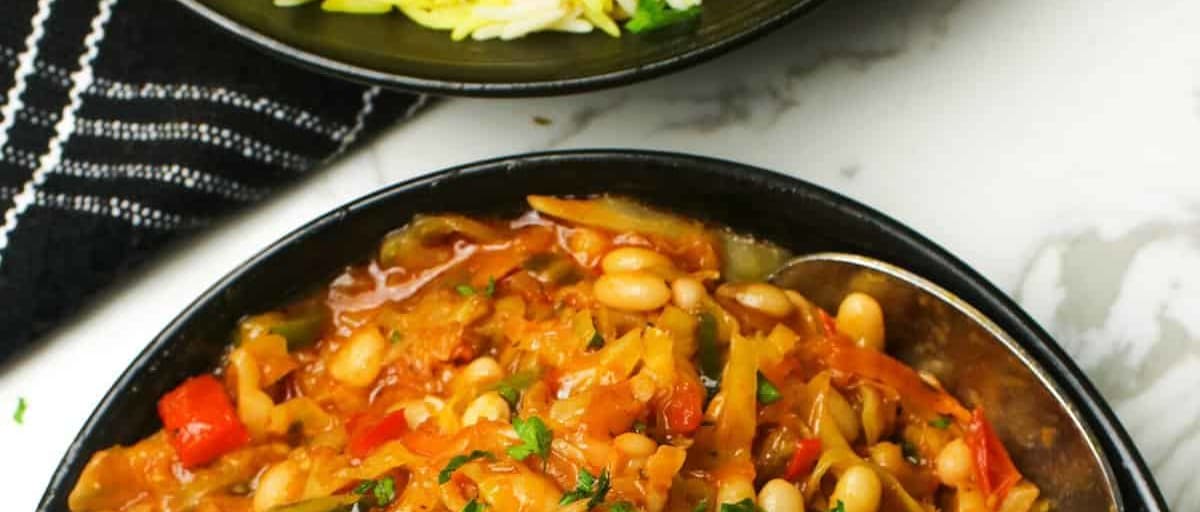
Chakalaka (South African vegetable & bean relish/stew)
Ingredients:
- chili peppers
- vegetable broth (veg cubes + water)
- baked beans
- tomatoes
- green cabbage
- bell peppers
- ginger
- carrot
- oil
- curry powder
- paprika
- cayenne pepper
- salt
- cilantro/coriander (to garnish)
How to cook:
- chop vegetables
- saute spices
- mix in vegetables
- If using a crockpot, heat on low overnight or on high for 4-6 hours.
- If using a large pot, bring to a boil, then simmer for 1 hour.
- Allow pot to sit after taking off heat, or eat immediately.
- Serve with rice.
Notes:
There is a lot of room here for modification, which is one thing I like about these kind of dishes. The unique blend of spices gives a very flavorful dish that evokes the culture and the landscape of the people of South Africa. But I could easily see how the flavor profile could be adjusted to another region by adding something like coconut milk to give a more Southeast Asian vibe. It reminds me of how culture and food (and language) can easily be borrowed and made to fit another context.
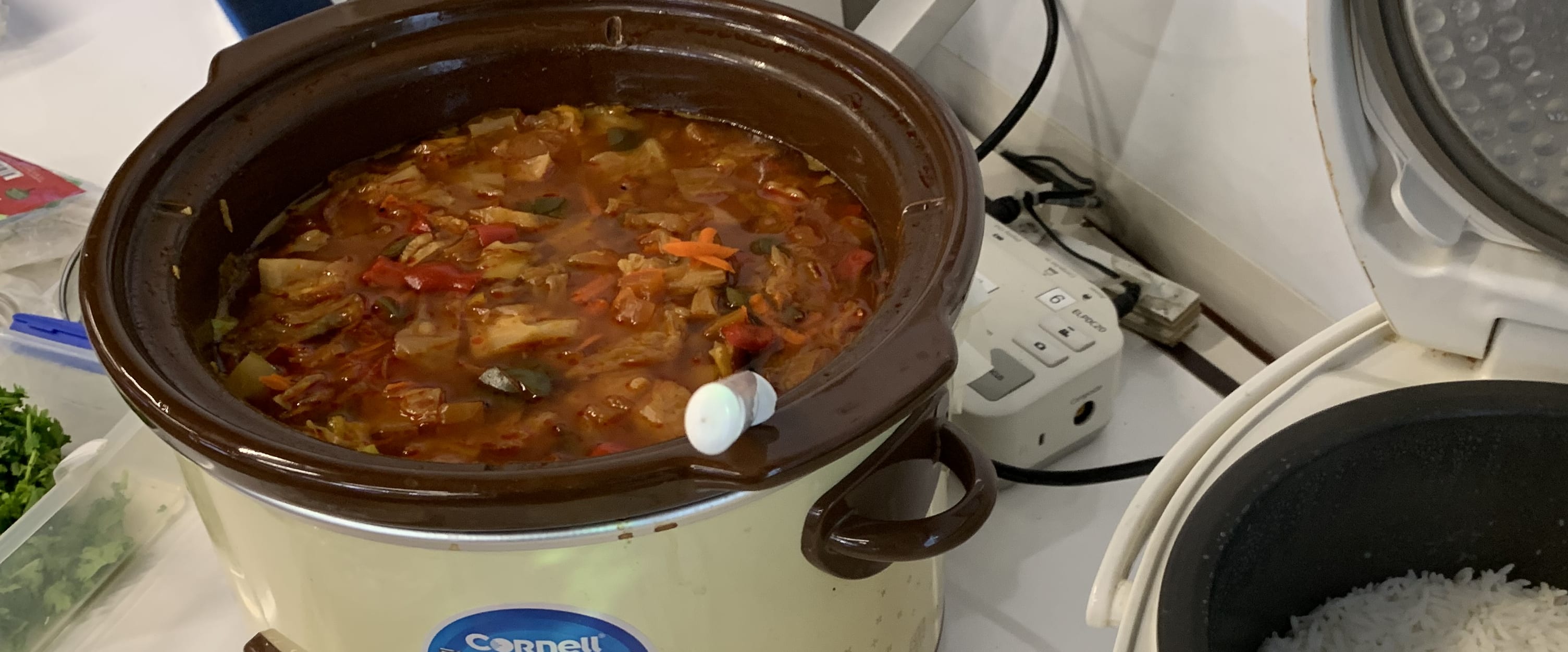
I served the dish with rice and some cilantro, with extra seasoning and pepper for people to add. The students all enjoyed it, and by the end of the student presentations it was all gone. This bodes well for fieldworkers in the region!